
Acne
Acne vulgaris, also known simply as acne, is one of the most common skin disorders affecting the so-called pilosebaceous units, which are formed by hair follicles (holes where hair grows out of the skin) and sebaceous glands (glands that secrete oil to keep hair and skin lubricated). It is characterized by the chronic development of papules, pustules and nodules. It may occur with inflammatory and non-inflammatory lesions, mainly on the face, but also on the upper arms, trunk and back.
Manifestation of this disorder varies, ranging from non-inflamed open and closed comedones ("blackheads" and "whiteheads") to more severe forms, such as papules, pustules and inflammatory nodules.
Acne is more common among adolescents and young adults, especially males, but it is not limited to these ages. It is estimated that about 35%-90% of adolescents develop acne. It usually appears between the ages of 7 and 12 and disappears by the age of 30. However, in some cases, it may last longer or reappear in adulthood, which is more common in women.
Although acne is not a disease that causes physical disability, its psychological impact may be significant, causing people affected by it to develop low self-esteem, depression and anxiety.


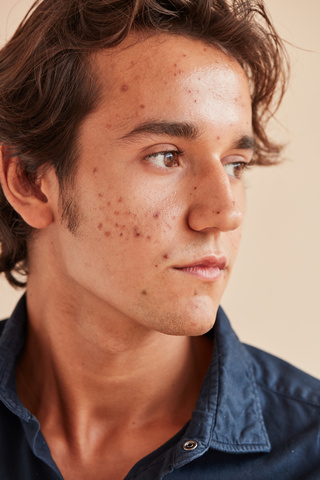

What are the main types of acne?
Medical professionals generally categorise acne based on the types of spots present and the severity of the inflammation. The most common form, acne vulgaris, involves a mix of non-inflammatory blackheads and whiteheads alongside inflammatory red pimples or pus-filled pustules. Doctors distinguish this from hormonal acne, which often flares up around the jawline in adults following monthly cycles. In more severe cases, patients develop nodulocystic acne, characterised by deep, painful lumps and cysts that carry a high risk of permanent scarring. Some individuals also experience acne conglobata, a rare but aggressive form where numerous spots interconnect under the skin.
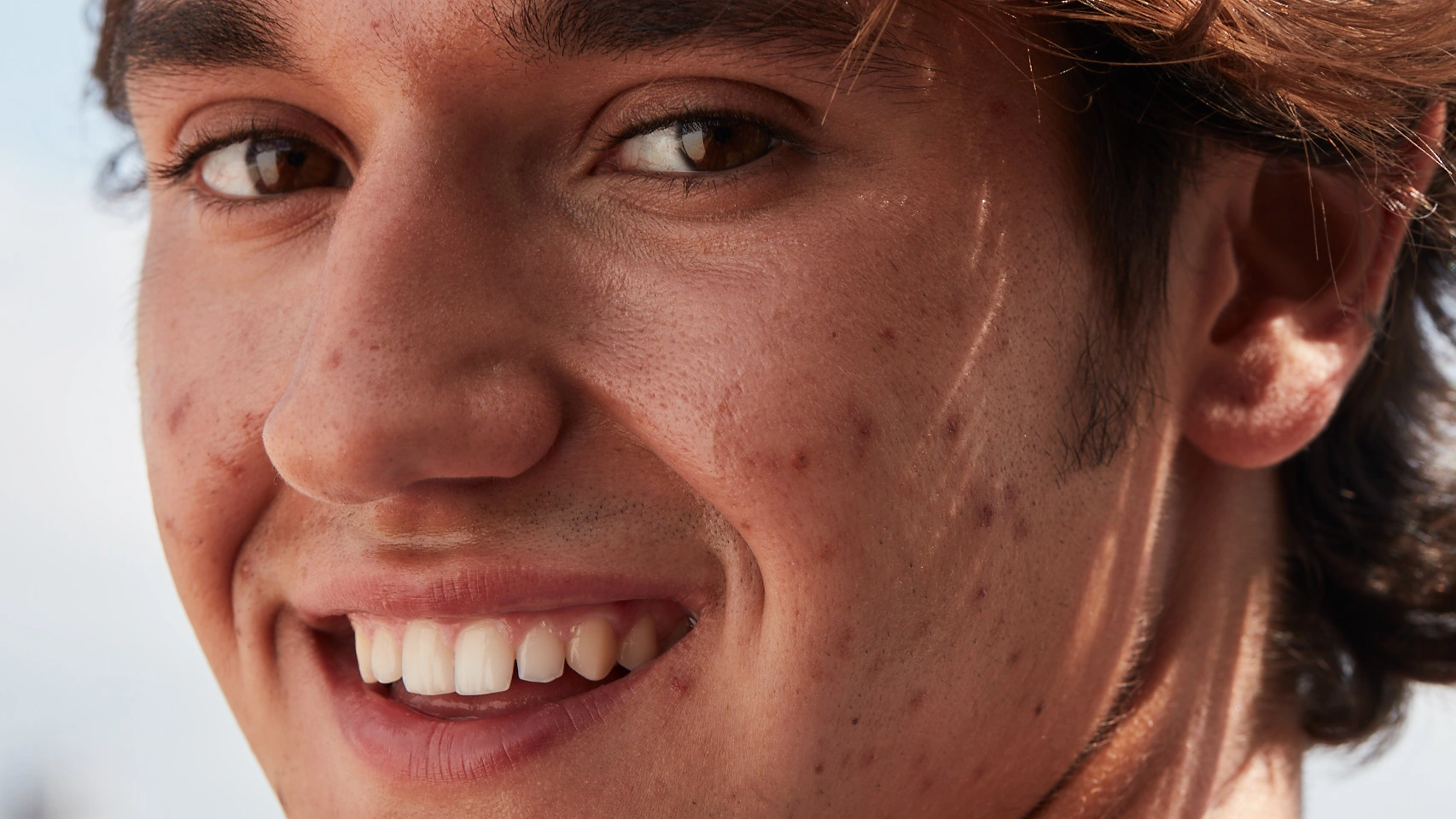
Max, living with acne
What causes acne?
The origin and development of acne involve different risk factors, the interaction of which lead to the formation of lesions called comedones and inflammation. During adolescence, acne is triggered by the sensitivity of sebaceous glands to hormones, particularly androgens, and to an excessive increase of Cutibacterium acnes, a bacterium usually found in hair follicles. There are 4 key pillars to acne development: hyperkeratinization, bacterial growth (C. acnes), sebum production and inflammation.

Sara, living with acne
How is acne diagnosed?
Acne vulgaris is usually diagnosed through a physical examination. There is no test for acne. Rarely, a doctor may take a swab or scraping of a lesion or pustule for microbiological examination or culture to rule out other sources of infection. For women, hormone blood tests may be ordered to look for, for example, high testosterone (an indicator of polycystic ovaries).
What are the main signs of acne?
Acne vulgaris occurs in those areas of the body with large sebaceous glands that respond to hormones, such as the face, neck, chest, upper back and upper arms, with different types of active lesions being present in the same area.
the severity and extent of acne may vary, from the periodic occurrence of a few small comedones to the chronic presence of numerous inflamed nodules that affect most of the skin in the affected area. After the acne disappears, the most common sequelae are hyperpigmentation and scars.
How is acne treated?
Effective acne management often requires a combination of therapies, as spots take at least eight weeks to develop. You should therefore follow a treatment plan consistently for two to three months before assessing its success. For mild to moderate cases, doctors usually prescribe topical products such as retinoids, benzoyl peroxide, antibiotics, or azelaic acid. These creams and gels work well on their own for less severe acne, but specialists also use them alongside oral medications to tackle more stubborn or widespread inflammation.
For moderate to severe acne, or breakouts covering the chest and back, oral treatments become necessary. Dermatologists typically prescribe tetracycline antibiotics to reduce bacteria and inflammation, though they may suggest hormonal contraceptives for women to manage specific triggers. If these methods fail, oral isotretinoin (a powerful vitamin A derivative) is a commonoption for severe cases. While light and laser therapies can support these standard treatments, they are not primary solutions. Additionally, using the right cosmetic products can help balance the skin and soothe irritation caused by these stronger medical prescriptions.


References
- Sutaria Amita H, Masood Sadia SJ. Acne vulgaris. StatPearls - NCBI Bookshelf. CRC Press; 2019. Available at: https://europepmc.org/article/med/29083670
- Thiboutot D, Zaenglein A. Pathogenesis, clinical manifestations, and diagnosis of acne vulgaris. UpToDate. 2015;1–51. Available at: https://www.uptodate.com/contents/pathogenesis-clinical-manifestations-and-diagnosis-of-acne-vulgar….
- Yazici K, Baz K, Yazici AE, Köktürk A, Tot S, Demirseren D, et al. Disease-specific quality of life is associated with anxiety and depression in patients with acne. J Eur Acad Dermatology Venereol. 2004 Jul;18(4):435–9. Available at: https://www.ncbi.nlm.nih.gov/pubmed/15196157
- Klassen AF, Newton JN, Mallon E. Measuring quality of life in people referred for specialist care of acne: Comparing generic and disease-specific measures. J Am Acad Dermatol. 2000 Aug;43(2 I):229–33. Available at: https://www.ncbi.nlm.nih.gov/pubmed/10906643
- Dalgard F, Gieler U, Holm JØ, Bjertness E, Hauser S. Self-esteem and body satisfaction among late adolescents with acne: Results from a population survey. J Am Acad Dermatol. 2008 Nov;59(5):746–51. Available at: https://www.ncbi.nlm.nih.gov/pubmed/19119094
- Webster GF, Leyden JJ, Nilsson UR. Complement activation in acne vulgaris: Consumption of complement by comedones. Infect Immun. 1979;26(1):183–6. Available at: https://www.ncbi.nlm.nih.gov/pmc/articles/PMC414592/
- Stathakis V, Kilkenny M, Marks R. Descriptive epidemiology of acne vulgaris in the community. Vol. 38, Australasian Journal of Dermatology. Blackwell Publishing; 1997. p. 115–23. Available at: https://onlinelibrary.wiley.com/doi/abs/10.1111/j.1440-0960.1997.tb01126.x
- Collier CN, Harper JC, Cafardi JA, Cantrell WC, Wang W, Foster KW, et al. The prevalence of acne in adults 20 years and older. J Am Acad Dermatol. 2008 Jan;58(1):56–9. Available at: https://www.ncbi.nlm.nih.gov/pubmed/17945383