
Acne diagnosis
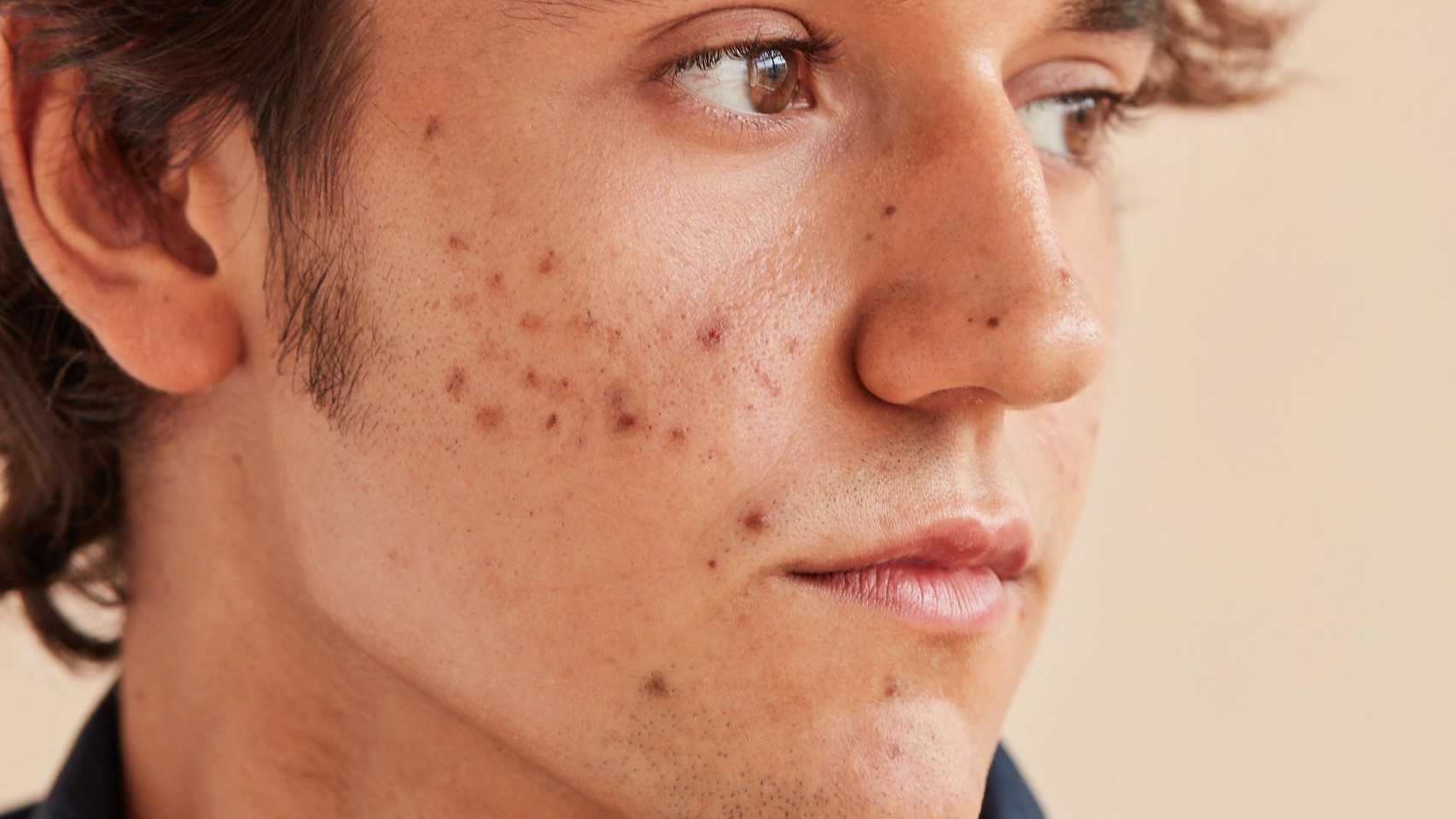
How is acne diagnosed?
Acne vulgaris is usually diagnosed through a physical examination. Routine microbiologicaltesting is not recommended in the evaluation and management of patients with acne. However, those who exhibit acne-like lesions suggestive of Gram-negativefolliculitis may benefit from microbiologicaltesting.
Routine endocrinological evaluation (e.g. for androgen excess) is not recommended for the majority of patients with acne. However, laboratory evaluation is recommended for patients who have acne and additional signs of androgen excess.
Medical history required for acne diagnosis
A complete medical history must be taken from the patient, including:
- Current age and age at onset of acne.
- Medication history.
- For women, menstrual history must be included, together with frequency and association with acne outbreaks.
- History of diseases.
- Family history of acne.
- Signs of virilization in small children or women, such as increase in pubic hair, male pattern hair loss, genital enlargement or deepening of the voice.
- Joint symptoms in patients with severe acne.
- Skin care habits.
- Current and previous acne treatments, and response to these treatments.
- Psychological impact of acne.
Once the medical history is completed, a physical examination must be conducted.
Type
Closed comedones, open comedones, inflammatory papules, inflammatory pustules, inflamed nodules.
Distribution
Face, chest, shoulders, back and arms.
Stages of the lesion
Check if the lesions in an area are found in the same or different stages of development (typical of acne).
Signs of hyperandrogenism
Suspicion of an abnormal increase in androgens, as may occur with polycystic ovarian syndrome, congenital adrenal hyperplasia, and adrenal or ovarian tumours, signs of virilization in prepubertal men and women.

Acne differential diagnosis
Although acne vulgaris is a common condition, often easy to diagnose, you should always be certain that it is not another disorder, such as skin conditions, acneiform rashes and other non-acne disorders because they can have a very similar appearance to acne. That is, a differential diagnosis must be performed. The diseases that must be ruled out include:
Rosacea
It is a skin disease that occurs with facial redness but, as it progresses, papules, micropustules and nodules may develop
Periorificial dermatitis
It occurs around the mouth or nose
Pseudofolliculitis of the beard
More frequent in people with Afro hair, it may be due to short, shaved or cut hair in the beard area that rolls back towards the skin, penetrates it and causes an inflammatory reaction.
Facial angiofibromas in tuberous sclerosis
They usually occur during childhood, on the cheeks and nose.
Sebaceous hyperplasia
It is characterized by the visible enlargement of sebaceous glands, more commonly in adults with A history of oily skin, more frequently on the forehead and cheeks.
Nevus comedonicus
It occurs at birth or during childhood as groups or rows of comedones.
Adnexal tumours
They are benign follicular tumours presenting as skin-coloured facial papules.
Favre-racouchot syndrome
It is a condition that occurs due to sun damage to the skin in the form of open and closed comedones, usually on the upper lateral cheeks in adults of middle or advanced age.
Folliculitis
There are several types similar to inflammatory acne, but, unlike acne, lesions are found in the same stage of development and there are no comedones.
Keratosis pilaris
It is a common condition caused by plugging of the hair follicle, with small follicular papules in the upper arms or thighs, sometimes with redness, and that may also occur in the face, particularly in children.
Suppurative hidradenitis
It is a chronic, inflammatory skin disorder, with periodic inflamed nodules and abscesses, preferably in the armpits, groin,under the breasts or around the anus; scars and comedones can also be found as small channels that go from the infected area to the skin surface.
Steatocystoma multiplex
Rare genetic disorder with development of multiple yellow or skin-coloured cysts full of sebum. They occur in the trunk, upper arms or chest.
Drug-induced acne
This acne is induced by drugs such as glucocorticoids, lithium, isoniazid, androgens and phenytoin, and usually presents an inflammatory papular rash with lesions in the same stage of development.
Neonatal cephalic pustulosis
Previously known as "neonatal acne," it is different from infantile acne because it occurs in the first weeks of life (infantile acne occurs between three and six months of age), with papules and inflammatory pustules on the face without comedones.
Cosmetic acne
Some cosmetic products may contain comedogenic ingredients (favouring the occurrence of comedones), which may lead to the formation of acne lesions. The improvement of the design of these products has reduced their presence in the market. Irritant reactions to cosmetic products can also cause a rash similar to acne vulgaris, but inflammatory lesions usually appear a few hours after applying the causative product.
Mechanical acne
It may occur due to contact with worn clothing, such as high collars, suspenders, shoulders, orthopaedic casts and sports helmets, which irritate pilosebaceous follicles and stimulate the formation of comedones.
Occupational acne and chloracne
Occurrence of comedones, inflammatory papules, pustules, nodules or cysts as a result of exposure (direct contact, inhalation of vapours or ingestion) to certain chemical products, such as insoluble cutting oils used in machines to work metal and derivatives of coal tar and chlorinated hydrocarbons.
- Thiboutot D, Zaenglein A. Pathogenesis, clinical manifestations, and diagnosis of acne vulgaris. UpToDate. 2015;1–51. Available at: https://www.uptodate.com/contents/pathogenesis-clinical-manifestations-and-diagnosis-of-acne-vulgar…
- Zaenglein AL, Pathy AL, Schlosser BJ, Alikhan A, Baldwin HE, Berson DS, et al. Guidelines of care for the management of acne vulgaris. J Am Acad Dermatol. 2016 May 1;74(5):945-973.e33. Available at: https://www.ncbi.nlm.nih.gov/pubmed/26897386