
Acne signs & symptoms
What are the signs and symptoms of acne?
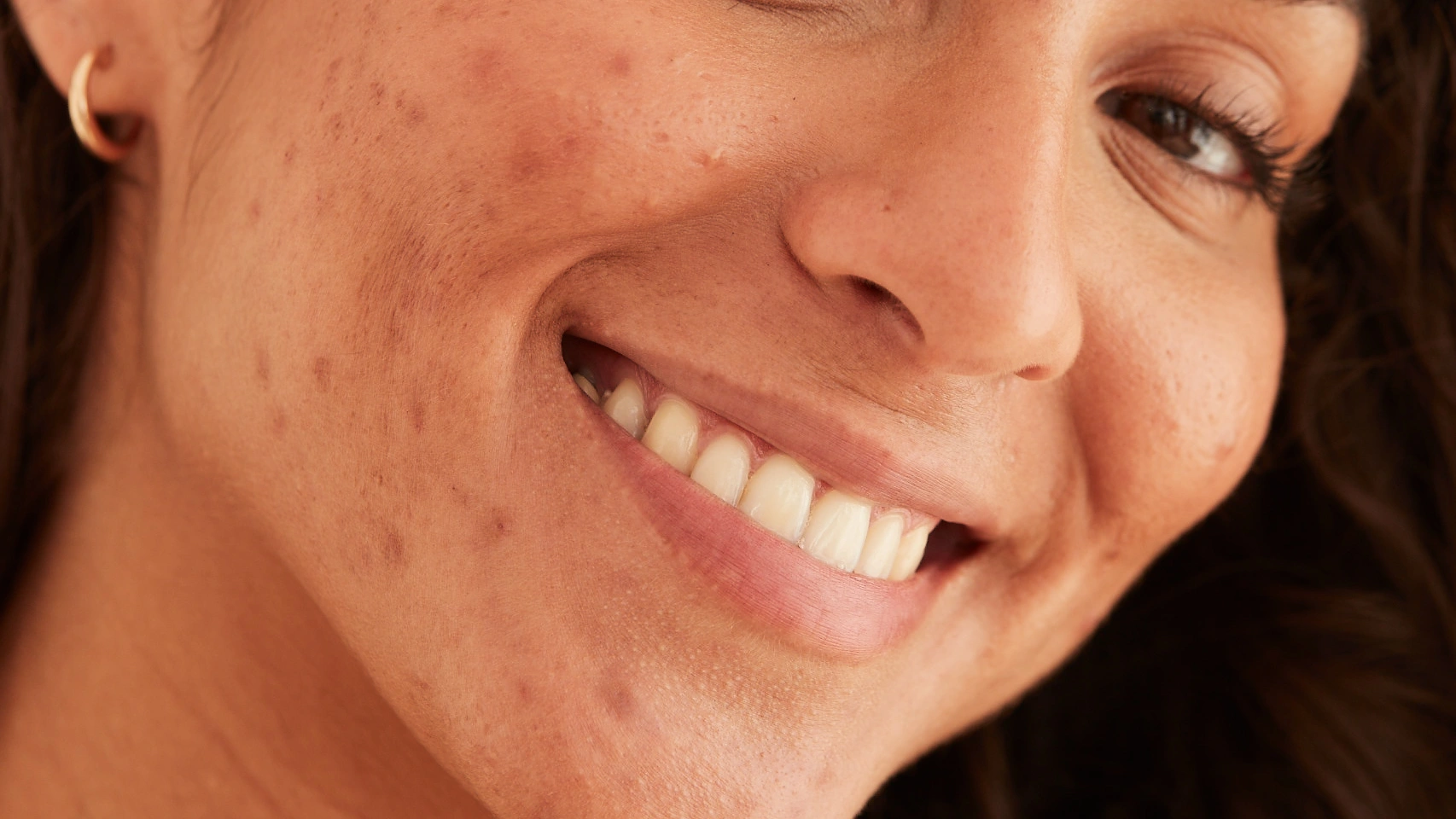
Acne vulgaris occurs in those areas of the body with large sebaceous glands that respond to hormones, such as the face, neck, chest, upper back and upper arms, with different types of active lesions being present in the same area.
Types of acne lesions
- Comedonal: There are two types of comedones: open and closed.
- Closed comedones: Papules with the colour of skin, whiteish or greyish, non-inflammatory, and a size lower than 5 millimetres.
- Open comedones: Non-inflammatory papules with a size lower than 5 millimetresthat present with a central hole containing a grey, brown or black substance formed by epithelial cells (keratinocytes) and sebum.
- Papulopustular: Formed by papules and inflamed, relatively superficial, pustules, usually with a size over 5 millimetres.
- Nodular: Characterized by large, inflamed and often sensitive papules, with a size over 5 millimetresand a deep base.
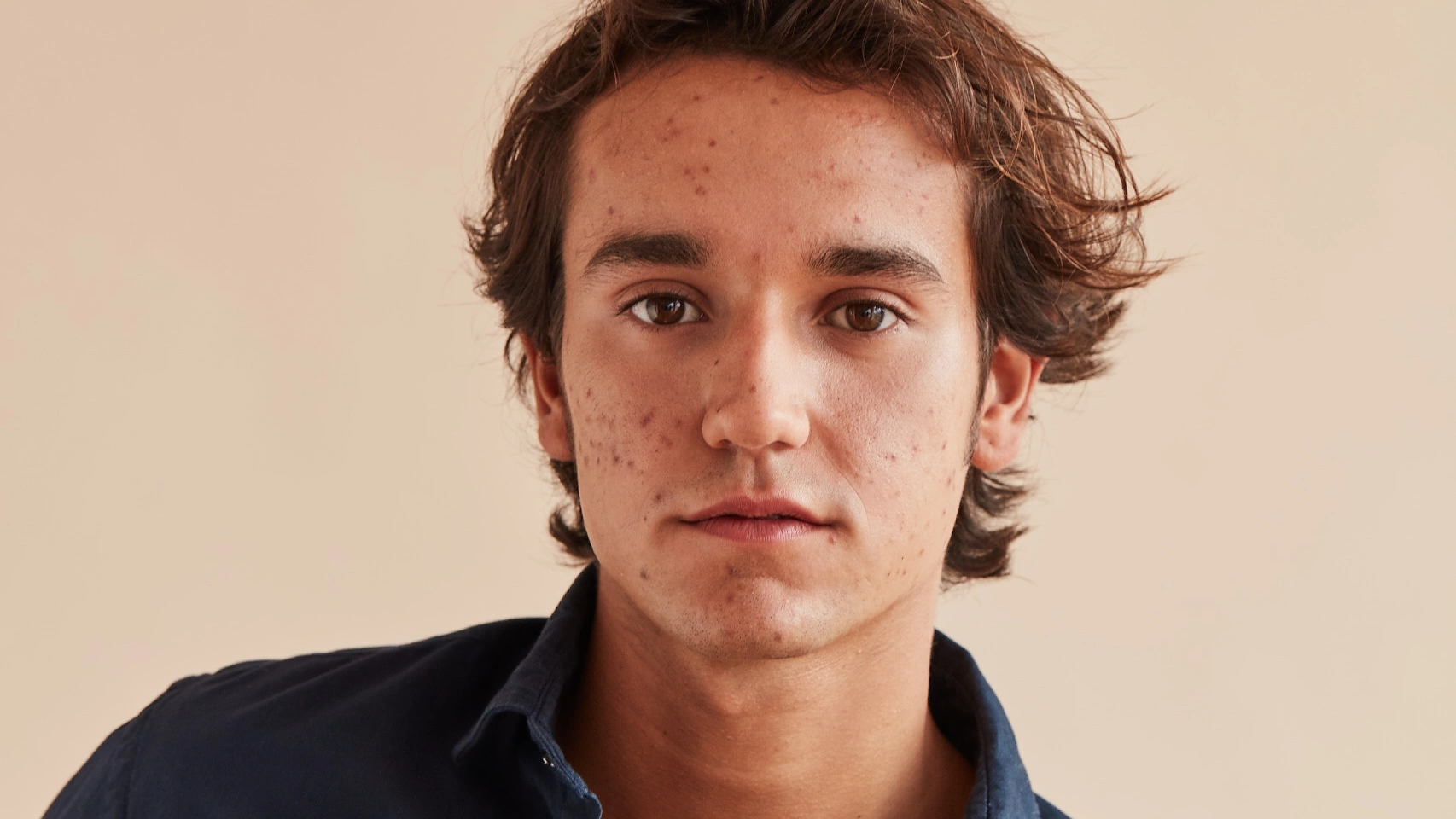
The severity and extent of acne may vary, from the periodic occurrence of a few small comedones to the chronic presence of numerous inflamed nodules that affect most of the skin in the affected area.
Presentation of the disease
It may vary based on the patient's characteristics. For example, young adolescents usually have comedonal acne on the forehead, nose and chin, and may develop inflammatory lesions as the disease progresses. In adult women, it usually occurs in the lower part of the face and neck, which is often associated with premenstrual flares.

Severity of acne
The severity of acne depends on the perception of each patient, but also on several factors:
- The clinical types of lesions: for example, those cases presenting with inflammatory nodular acne are usually considered severe acne.
- The presence of scars.
- The presence of draining lesions or sinus tracts.
- The lack of response to acne treatments.
- The psychological impact it has on the patient.
- Those cases presenting with abundant papules and inflammatory pustules and multiple scars are also considered severe.
Those cases presenting with abundant papules and inflammatory pustules and multiple scars are also considered severe.
Sequelae of acne
After the acne disappears, the most common sequelae are hyperpigmentation and scars.
In the case of post-inflammatory hyperpigmentation, the skin where the acne lesion was found becomes more pigmented. This increase in skin colour may spontaneously disappear or it may last for months. The more pigmented the patient's skin, the higher the risk of occurrence. It may even occur in patients with relatively moderate active acne.
Acne scarring is also a common consequence of acne vulgaris in some patients. Inflammatory acne is considered more likely to cause scars than non-inflammatory acne, although it is not clear why it occurs this way in some patients and not in others, although they present similar manifestations of acne vulgaris. Scars may be of several types:
- Atrophic scars
- Hypertrophic scars
- Keloids
References
- Sutaria Amita H, Masood Sadia SJ. Acne vulgaris. StatPearls - NCBI Bookshelf. CRC Press; 2019. Available at: https://www.ncbi.nlm.nih.gov/books/NBK459173/
- Thiboutot D, Zaenglein A. Pathogenesis, clinical manifestations, and diagnosis of acne vulgaris. UpToDate. 2015;1–51. Available at: https://www.uptodate.com/contents/pathogenesis-clinical-manifestations-and-diagnosis-of-acne-vulgar….
- Stoll S, Shalita AR, Webster GF, Kaplan R, Danesh S, Penstein A. The effect of the menstrual cycle on acne. J Am Acad Dermatol. 2001 Dec;45(6):957–60. Available at: https://www.ncbi.nlm.nih.gov/pubmed/11712049
- Lucky AW. Quantitative Documentation of a Premenstrual Flare of Facial Acne in Adult Women. Arch Dermatol. 2004 Apr;140(4):423–4. Available at: https://www.ncbi.nlm.nih.gov/pubmed/15096370
- Zaenglein AL, Pathy AL, Schlosser BJ, Alikhan A, Baldwin HE, Berson DS, et al. Guidelines of care for the management of acne vulgaris. J Am Acad Dermatol. 2016 May 1;74(5):945-973.e33. Available at: https://www.ncbi.nlm.nih.gov/pubmed/26897386
- Nast A, Dréno B, Bettoli V, et al. European evidence-based (S3) guidelines for the treatment of acne. J Eur Acad Dermatol Venereol. 2012;26 Suppl 1:1–29. doi:10.1111/j.1468-3083.2011.04374.x Available at: https://www.ncbi.nlm.nih.gov/pubmed/22356611