
Types of vitiligo
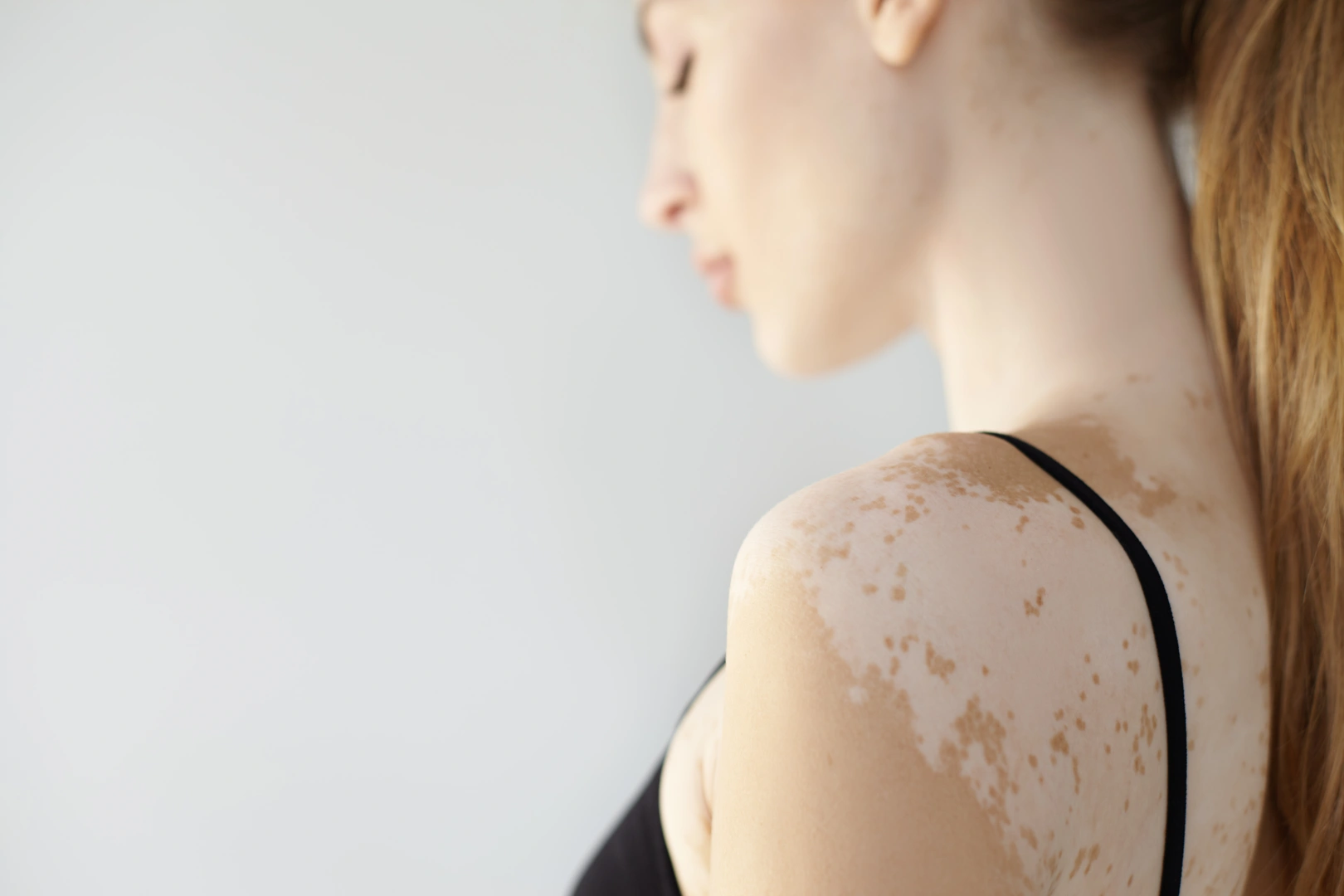
How many types of vitiligo are there?
Clinicians usually group vitiligo into two main categories: non-segmental and segmental. Within these broad groups sit a range of sub-types and patterns, including mucosal, focal, trichrome, universal, and confetti forms. These distinctions matter because each type shows its own spread pattern, rate of change, and, at times, response to treatment.
What are the main types of vitiligo?
Segmental
Segmental vitiligo produces patches of lost pigment on one side or in one defined area of the body. The patches often follow a nerve segment and usually do not cross the midline. This form is less common than non-segmental vitiligo and tends to appear earlier in life. It often progresses for a short period, usually months rather than years, before settling. Hair in the affected area may turn white, and people with this type have a lower risk of associated autoimmune conditions. Because the spread is limited and tends to stabilize, clinicians often take a different management approach compared with more widespread forms.
Non-segmental
Non-segmental vitiligo is the most common form and typically causes symmetrical patches on both sides of the body. Common sites include the hands, wrists, face, elbows, and knees. Most people with vitiligo fall into this category. New patches can appear over time, either gradually or in bursts of activity, and this type often occurs alongside other autoimmune conditions such as thyroid disease. Within this group sit several patterns, including acrofacial involvement and forms that include mucosal areas.
Mucosal
Mucosal vitiligo affects the pigmented tissues of the mouth, lips, genitals, and other mucosal surfaces. It may appear on its own or alongside skin involvement. Because pigment loss in these areas can have cosmetic and functional implications, it often requires tailored advice and management.
Focal
Focal vitiligo involves one or a small number of patches in a single area of the body. These patches do not follow a segmental pattern and, at least at the outset, do not spread widely. In some people, focal vitiligo represents an early or limited stage of a broader condition, while in others it remains stable. Its restricted nature often calls for a lighter treatment approach, but regular monitoring still matters.
Trichrome
Trichrome vitiligo shows three distinct colour zones: a central area with complete loss of pigment, a surrounding area that appears lighter than the person’s usual skin tone, and a ring of normal skin beyond that. This pattern often signals active change and can help clinicians judge how the condition is progressing and how well treatments for vitiligo are working.
Universal
Universal vitiligo describes very extensive pigment loss, usually affecting more than four fifths of the body surface. Because of its reach, it can have significant emotional, social, and practical effects on daily life. Management often focuses on camouflage options, psychological support, and advanced therapeutic strategies.
Confetti
Confetti vitiligo features clusters of tiny pale macules, usually only a few millimetres across. They may sit around the edges of existing patches or appear on their own. This pattern often suggests rapid progression, so it deserves close monitoring and, in many cases, a more proactive treatment plan.
Understanding the different types of vitiligo can help clarify a diagnosis and provide context for possible patterns of change and treatment options. If new or changing patches appear, or if the type of vitiligo is uncertain, a dermatologist can assess the skin, identify the likely pattern, and discuss management choices. In addition to medical treatment, some people may find it useful to consider options such as camouflage products, educational resources, or support groups.
References
- Vitiligo — Types of Vitiligo, Global Vitiligo Foundation. Available from: https://globalvitiligofoundation.org/types-of-vitiligo/
- Vitiligo, NHS. Available from: http://www.nhs.uk/conditions/vitiligo/
- Vitiligo Classification and Clinical Features, DermNet NZ. Available from: https://dermnetnz.org/topics/vitiligo
- Vitiligo Overview: Types, Causes, and Treatment, Pfizer. Available from: https://pfizer.com/disease-and-conditions/vitiligo
- Al-Smadi K et al. Vitiligo: A Review of Aetiology, Pathogenesis, Treatment. MDPI. 2023.