
Alopecia areata treatments
Is there a cure for alopecia areata?
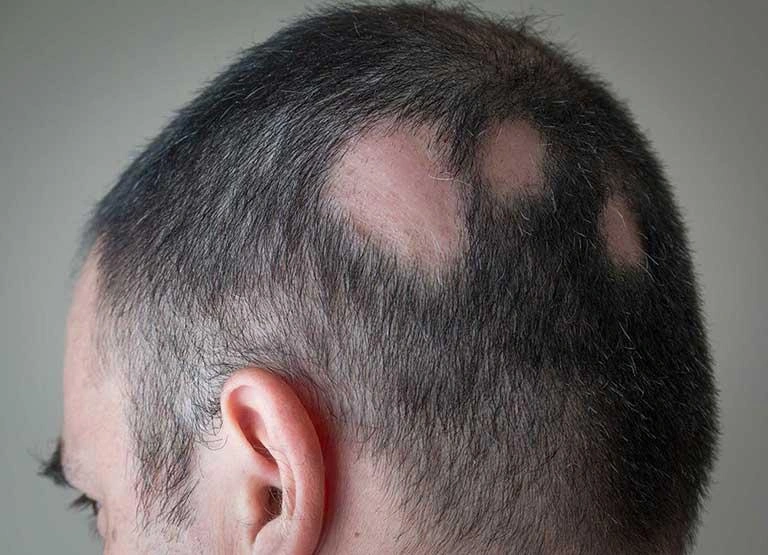
There is currently no definitive cure for alopecia areata (AA). The condition results from an autoimmune response that targets hair follicles, leading to non-scarring hair loss. Most people notice one or more well-defined bald patches on the scalp, although eyebrows, eyelashes, and other hair-bearing areas may also be affected.
However, around four in five people with mild, patchy involvement recover full hair growth within a year without any active treatment, although this improvement may not last indefinitely, and further episodes of hair loss can occur later on.
When hair loss is extensive at the outset, the outlook is less favourable. In these severe cases, the likelihood of full and lasting regrowth is much lower, with only a small proportion achieving complete recovery.
For most people, treatment of alopecia areata focuses on encouraging hair regrowth, slowing or preventing further loss, and addressing the emotional and psychological impact of the condition. Early assessment, tailored planning, and shared decision-making between clinician and patient remain central to effective care.
Selecting an appropriate treatment requires a careful, individualized assessment that takes the following into account:
Extent and severity of hair loss
People with small, localized patches usually have a better outlook and may be offered less aggressive options. More widespread or rapidly worsening hair loss often prompts stronger interventions.
Duration of symptoms
The longer patches have been present without signs of spontaneous regrowth, the lower the chance of natural improvement. This increases the importance of active treatment.
Pattern of involvement
Loss of eyebrows, eyelashes, or all scalp or body hair may shift the balance towards more intensive therapies.
Age and overall health
Children, teenagers, and adults may respond differently to treatments, and certain medical conditions can influence suitability or safety.
Speed of onset
Sudden and fast-progressing hair loss typically warrants earlier intervention.
Patient preferences and quality of life
Comfort, convenience, safety, and the emotional effects of AA are central to decision-making. Personal priorities vary, and treatment plans should reflect this.
Safety profile and monitoring needs
Some systemic therapies require medical monitoring due to potential side effects. These considerations play a key role when weighing risks and benefits.
Cost and availability
Not all treatments are licensed for AA in every country. Access, affordability, and regulatory status can influence the final choice.
Expectations and uncertainty
Because alopecia areata is unpredictable, outcomes vary widely. Clinicians should discuss realistic goals, including the possibility of incomplete regrowth or relapse.
In summary, treatment must be personalized and centred on the individual’s needs, preferences, and risk profile. Clear communication about the evidence behind each option is essential.
There are several treatments available depending on the severity of the condition. Research in alopecia areata is advancing quickly, and several newer medicines are reaching the market.
Treatments for mild or limited alopecia areata
People with one or a few small patches of hair loss (typically involving less than half of the scalp) may consider the following approaches:
Topical corticosteroids
Frequently used as an initial option, these creams, foams, or solutions calm the immune response around affected follicles and can encourage regrowth.
Intralesional corticosteroid injections
Commonly used in adults with small patches, these injections deliver targeted treatment directly into affected areas.
Topical immunotherapy
Agents such as diphencyprone (DPCP) create a controlled local reaction that can stimulate hair growth. This approach is usually reserved for cases that do not respond to standard topical treatments and may not be licensed in all regions.
Observation ('watchful waiting')
Given the high likelihood of spontaneous regrowth in mild cases, some people choose to monitor progress for several months before starting active treatment. This option is most suitable when the psychological impact is manageable and the patient is comfortable with the possibility of recurrence.
Deciding when to start treatment for alopecia areata often depends on the pace of hair loss and how much it affects daily life.
Treatments for moderate-to-severe alopecia areata
For moderate-to-severe alopecia areata which, is caracterized by widespread hair loss (such as more than 50% of the scalp), rapid progression, or total involvement of the scalp and body (alopecia totalis and universalis), management shifts from local to systemic interventions.
Systemic corticosteroids
Short courses of oral steroids can prompt regrowth, although the effects often diminish after treatment ends and relapse is common.
Systemic immunosuppressants (such as methotrexate or cyclosporine)
These medicines may provide benefit, particularly when combined with corticosteroids, but they require careful monitoring due to potential side effects and the likelihood of relapse once stopped.
Combination therapy:
This is the use of two or more treatments together. For example, systemic therapy with topical or intralesional options may be considered, based on individual circumstances and previous responses.
Oral JAK inhibitors
Medicines targeting Janus kinase pathways have shown the most consistent results in clinical studies of severe AA. Agents such as baricitinib, deuruxolitinib, and ritlecitinib have demonstrated meaningful regrowth in many adults with extensive hair loss.
Emerging systemic therapies
Research continues into newer JAK inhibitors, biologic medicines, and other innovative approaches. These may offer further options in future as evidence develops.
Supportive strategies
Severe AA can be emotionally challenging. Psychological support, practical advice on cosmetic options, and early referral to dermatology specialists form an important part of holistic care.
Relapse prevention and maintenance
Even when treatment is effective, hair loss may return once therapy is stopped. Many people therefore require ongoing or repeat treatment to maintain results.
References
- Sibbald C. Alopecia areata: An updated review for 2023. J Cutan Med Surg [Internet]. 2023 [cited 2025 Nov 18];27:241-259. Available at: https://pmc.ncbi.nlm.nih.gov/articles/PMC10291119/
- National Alopecia Areata Foundation. Available treatments [Internet]. [cited 2025 Nov 21]. Available from: https://www.naaf.org/navigation-toolkit/available-treatments/
- British Association of Dermatologists. Alopecia areata [Internet]. 2024 Apr [cited 2025 Nov 21]. Available from: https://www.bad.org.uk/pils/alopecia-areata
- Kropidłowska J, Kvinen A, Lewandowski M, Nowicki RJ, Barańska-Rybak W. Comparison of current international guidelines for the management of alopecia areata—Comprehensive review. Int J Mol Sci [Internet]. 2025 [cited 2025 Nov 18];26(17):8632. Available at: https://www.mdpi.com/1422-0067/26/17/8632
- Egeberg A, et al. Treatments for alopecia areata (AA): systematic literature review and narrative review of moderate-to-severe disease. Dermatol Ther [Internet]. 2023 [cited 2025 Nov 18];33:e15768. Available at: https://link.springer.com/article/10.1007/s13555-023-01044-5
- Malhotra K, et al. An updated review on current treatment of alopecia areata and novel therapies. Int J Trichology [Internet]. 2023 [cited 2025 Nov 18];15:10. Available at: https://pmc.ncbi.nlm.nih.gov/articles/PMC10251289/