
Vitiligo
Vitiligo is a non-contagious chronic skin condition that affects 0.5 to 2% of the worldwide population and is associated with a loss of pigmentation due to the progressive destruction of melanocytes, the skin cells that produce melanin, responsible for skin colour.
It manifests as pink or white irregularly shaped macules or patches that frequently appear on the face and other visible areas of the body such as the hands, feet, and arms, but it can develop anywhere, including mucous membranes like the nostrils, genitals, or inner part of the mouth. When patches develop on a hairy part of the body, hair can turn silver, gray or white.
For patients, the disease is perceived as disfiguring and burdensome, and in consequence it can therefore be psychologically devastating, with an impact on quality of life similar to other dermatologic conditions such as psoriasis or atopic dermatitis.
Besides, Vitiligo can also be associated with systemic changes, including inflammation of the eyes and ears, and people living with this disease are more likely to get sunburnt in affected areas due to the lack of melanin, which increments the risk of suffering other dermatological conditions. Furthermore, people whit vitiligo have a higher risk of developing some other autoimmune diseases like thyroid disease.
Even though vitiligo can appear at any age, almost 50% of patients start exhibiting signs of the disease before they are 20 years old. The condition tends to progress over time, with larger areas of the skin losing pigment, but the patches can remain stable or even improve. It is equally present among both sexes and among people of different skin types, but it is more visible in people with darker skin.
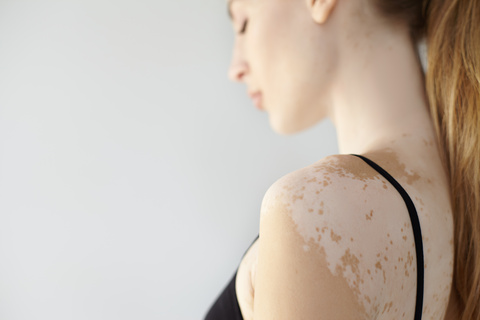



Types of vitiligo
There are different types of vitiligo. Some of the most common ones are:
- Generalized: macules or patches appear on various places of the body, often in a symmetrical way. This is the most common type.
- Segmental: this kind of vitiligo only affects one area or side of the body.
- Focal: one isolated, small, and depigmented patch.
- Universal: the skin is completely or nearly completely depigmented.

What causes vitiligo?
Vitiligo is an autoimmune disease in which immune cells of the body mistakenly attack melanocytes, the cells responsible for producing melanin. Even though genetics strongly influence the risk of developing vitiligo, some external factors can also contribute, among them severe sunburn, pregnancy, major skin injuries, and significant stress.
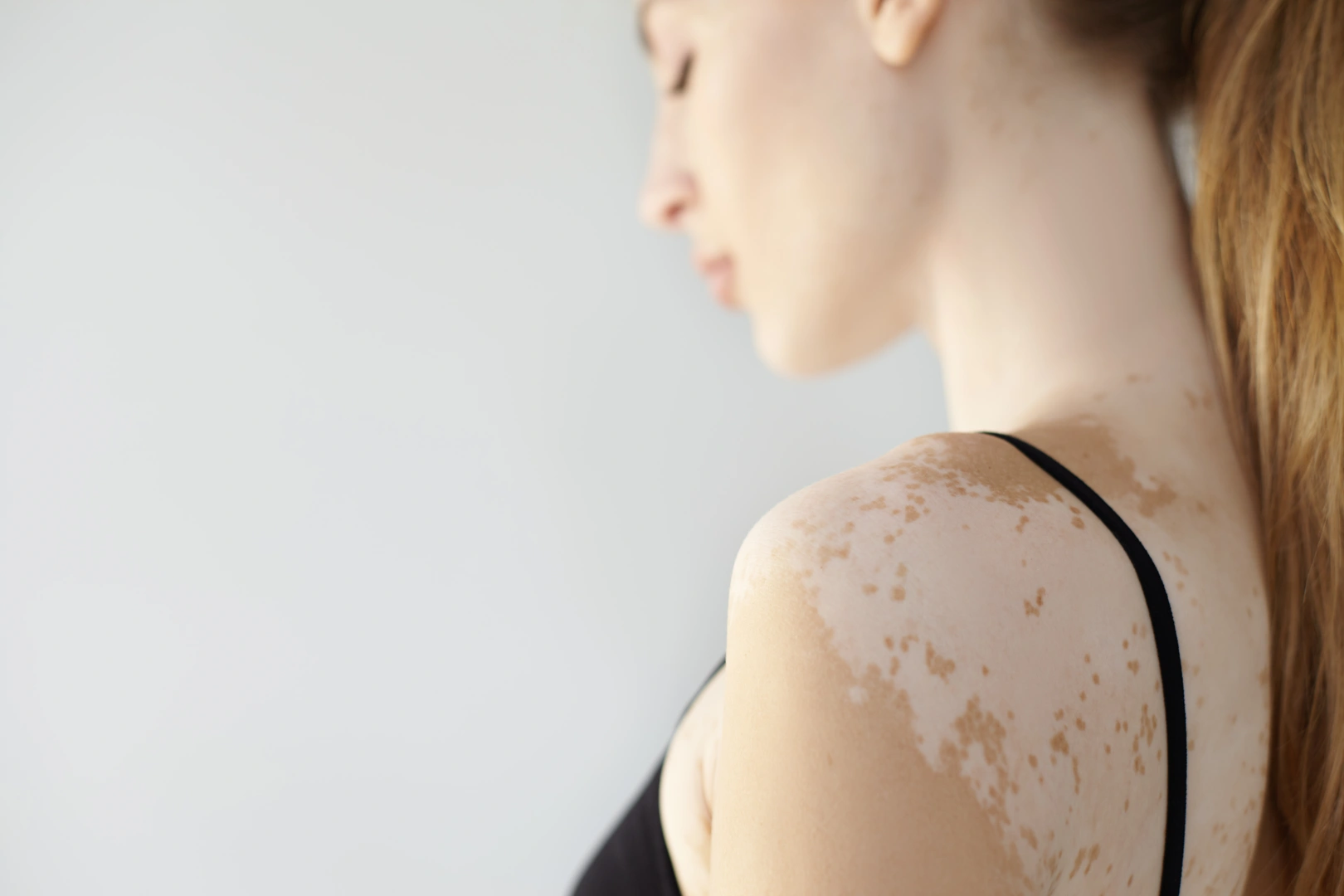
How is vitiligo detected?
The appearance of white or pink macules or patches on the skin are usually the most prevalent symptom of vitiligo, although some patients report itching before a new patch appears. Healthcare providers can usually diagnose vitiligo fairly easily through visual examination, but sometimes they will use an ultraviolet lamp to confirm affected areas, especially when patients are light-skinned. Healthcare providers might also request blood tests to rule out underlying autoimmune conditions.
What are the signs and symptoms of vitiligo?
Vitiligo primarily causes the loss of natural pigment, resulting in distinct, milk-white patches on the skin. These patches usually appear first on sun-exposed areas like the face, hands, and feet, or around body openings and skin folds such as the armpits and groin.
You may also notice your hair turning white or grey prematurely on the scalp, eyelashes, or eyebrows, as the condition affects the melanocytes in the hair follicles. While the skin texture remains smooth and normal to the touch, the depigmented areas often feel more sensitive to sunlight and can itch or sting during active phases of the disease. In some cases, the condition also causes a loss of colour in the tissues inside the mouth and nose.
How is vitiligo treated?
Even though there is currently no permanent cure for vitiligo, there are several options available to clear existing vitiligo patches and/or prevent them from growing:
- Topical corticosteroids: the use of a corticosteroid anti-inflammatory cream or ointment on vitiligo lesions can be effective at restoring some pigment, especially in cases where vitiligo has recently developed. However, because of possible secondary effects such as thinning of the skin, healthcare providers often prescribe these treatments for a limited time. Currently, TCIs and topical JAK inhibitors are two non-steroidal medications increasingly used to manage inflammatory skin conditions such as vitiligo.
- Phototherapy: this treatment involves exposing the skin to a type of ultraviolet light that can restore natural skin colour. Even though it can be helpful for some patients, treatment often needs to be prolonged, requiring hospital visits two or three times a week for several weeks or months. Sometimes it is used in combination with other treatments such as topical corticosteroids.
- Surgical treatment: surgery can be an option in exceptional cases.
References
- Rodrigues M, Ezzedine K, Hamzavi I, Pandya AG, Harris JE; Vitiligo Working Group. New discoveries in the pathogenesis and classification of vitiligo. J Am Acad Dermatol. 2017;77(1):1–13. doi:10.1016/j.jaad.2016.10.048.
- Hann, S. K., & Nordlund, J. J. (2000). Vitiligo: A monograph on the basic and clinical science. In Vitiligo: A monograph on the basic and clinical science (pp. xiv-306).
- Elbuluk N, Ezzedine K. Quality of life, burden of disease, co-morbidities, and systemic effects in vitiligo patients. Dermatol Clin. 2017;35(2):117–128. doi:10.1016/j.det.2016.11.002.
- Morrison B, Burden-Teh E, Batchelor JM, Mead E, Grindlay D, Ratib S. Quality of life in people with vitiligo: a systematic review and meta-analysis. Br J Dermatol. 2017;177(6):e338–e339. doi:10.1111/bjd.15933.
- Radtke MA, Schäfer I, Gajur A, Langenbruch A, Augustin M. Willingness-to-pay and quality of life in patients with vitiligo. Br J Dermatol. 2009;161(1):134–139. doi:10.1111/j.1365-2133.2009.09091.x
- British Skin Foundation. Vitiligo. Available at: https://knowyourskin.britishskinfoundation.org.uk/condition/vitiligo/
- American Academy of Dermatology. Vitiligo. Available at: https://www.aad.org/public/diseases/a-z/vitiligo-overview